Fruit Ninja


Rating:
4.43
Played:
10,876
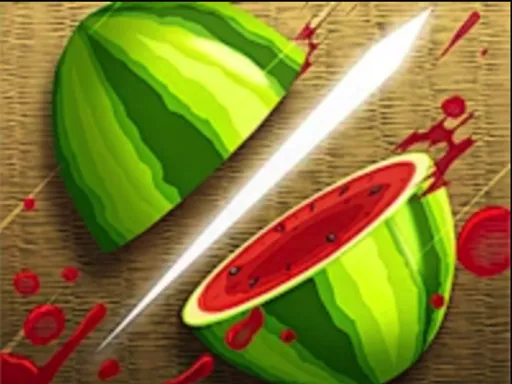
Fruit Ninja turns a simple idea into an instantly readable arcade challenge. Fruit rises in clean arcs, you slice through it with a quick swipe, and the screen rewards accuracy with bright cuts, combo bursts, and that familiar feeling that one more run could be your best. The browser version keeps that loop sharp. Open the game, start moving, and within seconds you understand why Fruit Ninja became one of the best-known mobile action games of its era.
What makes it stick is not complexity. It is clarity. Every round asks you to read motion, pick a path, and commit to a line before the chance is gone. When you play poorly, it usually comes from the same mistake: chasing too much fruit at once and letting a bomb or a missed target break your rhythm.
Why the Simple Loop Still Works
The core rule has barely needed explanation for years. Slice fruit. Do not hit bombs. Keep the run alive. That sounds almost too small to carry a whole game, but the timing changes constantly. Fruit can rise in tight clusters, in staggered lines, or with awkward spacing that tempts you into messy swipes. The challenge is not just speed. It is judgment. You are always deciding whether to take the safe two-fruit cut or stretch for a larger combo.
That risk and reward balance is why Fruit Ninja still feels good in a browser. Each round is short, so failure never costs much. At the same time, every mistake is visible. The game teaches through immediate feedback instead of long tutorials.
Reading arcs before reacting
New players often swipe at the first fruit they see. Stronger runs usually come from waiting a fraction of a second. Watch the apex of each arc, notice which fruit are about to cross, then draw one controlled line through the best group. That tiny pause gives you cleaner cuts and lowers the chance of clipping a bomb hidden underneath the pattern. In Fruit Ninja, patience often creates more points than raw aggression.
Playing Fruit Ninja in Your Browser
Browser play works because the controls map naturally to the game’s original touch fantasy. On desktop, you are using a mouse or trackpad to draw the blade path. On mobile, you swipe directly with your finger. The version used on this site keeps the focus on that basic movement, so there is almost no setup friction. Load the page, wait for the board to appear, and start slicing.
If you want the smoothest session on desktop, keep your browser window stable and avoid wild full-screen mouse travel. Short motions are usually better than large arm swings. On touch devices, hold the screen so your hand does not cover the spawn area near the lower edge.
Controls that feel better after two rounds
Most browser builds use simple pointer input. Click, drag, or swipe through the fruit, then lift and reset. Many beginners leave the pointer moving in wide circles, which creates accidental extra lines and late corrections. A better habit is to cut, stop, re-center, then cut again.
Scoring, combos, and staying alive
High scores come from combining accuracy with efficiency. A single fruit is fine when the pattern is dangerous, but two- and three-fruit cuts are where the score climbs faster. Good combo play is less about heroic swipes and more about lining up predictable paths. Horizontal cuts work well when fruit rise together, while short curves can connect a loose cluster without sending your line into a bomb.
Bombs are the pressure mechanic that keeps the game honest. They sit near ideal routes and punish players who only look at fruit. Treat bombs like moving walls. If the best combo path passes too close, skip it and take the smaller score. Long sessions in Fruit Ninja are built from many conservative decisions, not only from spectacular ones.
Common mistakes that end promising runs
The first mistake is over-swinging. A long flourish may look impressive, but it is harder to stop once the pattern changes. The second is tunnel vision. Players sometimes lock onto one stray fruit and forget the bomb entering from the side. The third is panic after a miss. Missing one fruit does not ruin a round. Panicking often does. Reset your eyes, re-center your hand, and treat the next pattern like a new puzzle.
From mobile hit to browser favorite
Fruit Ninja was created by Halfbrick Studios and first became a breakout success on smartphones in April 2010. Its appeal was immediate: almost anyone could understand the goal in seconds, but chasing a truly strong score took timing and repetition. Over time, the broader Fruit Ninja brand grew around modes such as Classic, Zen, and Arcade, plus extra blades, dojos, events, and later platform adaptations.
The browser edition strips the experience back to the recognizable essentials. You still get flying fruit, bomb avoidance, combo chasing, and quick restarts. That is enough. A lot of games try to hold attention by adding layers of progression before the basic interaction feels good. Fruit Ninja succeeded in the opposite direction. The slicing itself was satisfying first, and everything else came later.
Why it remains easy to revisit
Some arcade games ask for a long warm-up before they feel good again. Fruit Ninja usually does not. One or two rounds are enough to remember the pace. That makes it perfect for short breaks, score challenges with friends, or a few quick attempts between other tasks.
Frequently Asked Questions
Is Fruit Ninja free to play in a browser?
Yes. Browser versions are commonly free to start, and this one is built for instant play without a separate download. As long as your device can run a modern browser, you can jump into a round quickly.
Do I need a touchscreen to enjoy it?
No. Touch controls feel natural, but Fruit Ninja also works well with a mouse or trackpad. Desktop play can be very precise if you keep your swipes short and reset your pointer between cuts.
How do I score better without taking huge risks?
Focus on repeatable two- and three-fruit combos. Watch the arcs, cut near the top where movement is easier to read, and skip any line that pulls you too close to a bomb. Clean fundamentals usually beat flashy gambles.
What usually causes game over?
Most failed runs come from either hitting a bomb or losing control after trying to force difficult slices. Late-round pressure makes both mistakes more common, so staying calm is often more important than moving faster.
Is the browser version the same as the original mobile release?
Not always. The browser version usually focuses on the central slicing loop, while the wider Fruit Ninja franchise has included additional modes, progression systems, and platform-specific extras over the years. The core appeal is still the same.
Can children play Fruit Ninja easily?
Usually, yes. The goal is simple to understand and the controls are direct. Younger players may still need a little practice with timing and bomb avoidance, but the game is approachable because rounds start fast and restart just as fast.
Why one more run keeps happening
Fruit Ninja remains effective because it never loses sight of what the player is there to do. You slice, you improve, and the score tells the story immediately. Whether you want a relaxing two-minute break or a focused score chase, the game gives you a clean skill loop without unnecessary waiting.


Comments
Loading comments…