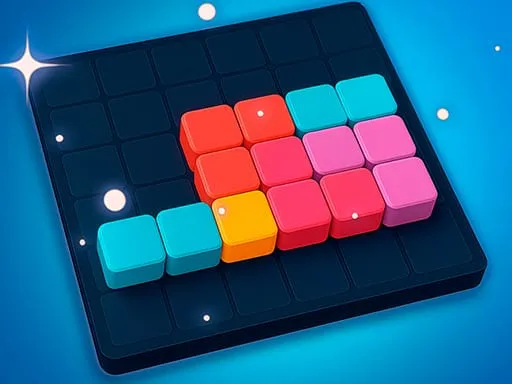
How to Play Block Puzzle
A practical Grade 9 guide to block puzzle basics, strategy, and long-run survival, based on widely used game rules and real play habits.
If you are new to block puzzle, this guide will help you start fast. You will learn clear rules, easy habits, and strong patterns. By the end, you will know how to play block puzzle with more control and less stress.
Many players open a block puzzle game and place shapes at random. That feels fun for a few minutes, then the board gets full and the run ends. The difference between a short run and a long run is not luck. In block puzzle, your choices matter on every move.
This article uses ideas from popular versions such as Block Puzzle Sudoku by MobilityWare and Block Champ by Arkadium. Those pages explain that many block puzzle versions use three pieces at a time, clear lines, and end when no legal move remains. Some versions also clear 3x3 boxes.
You can practice everything in this guide on https://block-puzzle.org, the home of Block Puzzle. We built this site so you can play block puzzle quickly in your browser and train with less friction.
What This Guide Covers
This guide covers your full block puzzle run, from the first move to the final survival turns. It works for classic 10x10 line-clear modes and 9x9 variants with box clears. The core thinking is the same: fit shapes, keep space open, and avoid dead areas.
If you only remember one sentence, remember this: great block puzzle players protect future space. They do not chase one clear if that clear ruins the next five moves.
Core Rules You Must Know
Different apps have small changes, but most block puzzle games share these rules:
- You drag shapes onto empty cells on a grid.
- A full row or full column clears.
- In some modes, a full 3x3 box also clears.
- You often get three shapes in a set, then a new set appears.
- The run ends when none of the current shapes can fit.
That last rule is the heart of block puzzle. You do not lose because time runs out. You lose because space runs out.
First Mindset Shift: Space Is Your Real Score
New players watch points. Strong players watch space. In block puzzle, points come from clean space management.
When you ask, "Is this move good?" use this test:
- Does this move keep the center open?
- Does this move leave clean edges for long shapes?
- Does this move avoid tiny isolated holes?
- Can I still place awkward shapes after this?
If the answer is mostly yes, it is usually a good block puzzle move.
Learn the Shape Families
You will see the same families again and again in block puzzle:
- Small singles and doubles
- 3-long bars (horizontal or vertical)
- 4-long and 5-long bars
- L-shapes and mirrored L-shapes
- Square blocks (2x2, 3x3 in some variants)
Your block puzzle plan should always leave options for long bars and L-shapes. Those pieces cause many game overs when the board is messy.
A useful habit: before placing the first shape in a set, look at all three. In block puzzle, the first piece can block the third piece if you rush.
Opening Strategy: The First 20 Moves
The opening decides your pace. In early block puzzle moves, do not build tall stacks near the center.
Use this opening routine:
- Place flexible small pieces near edges first.
- Keep a plus-shaped open zone around the center.
- Do not close narrow one-cell tunnels.
- Save at least one lane for a long bar.
A calm opening in block puzzle gives you more legal placements later. A chaotic opening gives short-term points and long-term pain.
Mid-Game Rhythm: Clear with Purpose
In mid-game block puzzle, many players clear any line they can. Sometimes that is right, but not always.
A smarter rhythm:
- Prefer clears that also flatten the board.
- Avoid clears that create jagged cliffs.
- If two clears are possible, pick the one that keeps larger empty rectangles.
- Delay a clear if waiting one move gives a cleaner board.
This is where block puzzle starts to feel strategic. You are not just placing shapes. You are shaping the board for the next set.
Center Control in Block Puzzle
The center is prime real estate in block puzzle. If you fill the center too early, you force awkward edge play and lose flexibility.
Try this center rule:
- Keep at least a 3x3 to 4x4 workable area near center as often as possible.
Why this helps in block puzzle:
- Long bars can pivot around open center lanes.
- L-shapes have more entry points.
- Emergency placements stay available.
When the center is blocked in block puzzle, every next move becomes harder.
Edge and Corner Discipline
Edges and corners are useful in block puzzle, but only when used with care.
Good edge use:
- Parking small pieces that would otherwise waste center cells.
- Building clean straight walls that match long bars.
Bad edge use:
- Creating deep notches that only one rare shape can fill.
- Locking corners with mixed heights.
A simple block puzzle check: if a corner needs one exact piece, that corner is dangerous.
Avoid the Three Trap Patterns
Most failed block puzzle runs include one of these patterns:
- Single-cell islands: tiny holes surrounded by filled cells.
- Staircase walls: uneven edges that reject long bars.
- Closed pockets: spaces that look open but have no entry path.
The cure is prevention. In block puzzle, fixing a trap is harder than avoiding it.
Playing Three-Piece Sets Well
Many block puzzle variants present three pieces together. Treat that as one puzzle, not three separate moves.
Before move one, ask:
- Which piece is hardest to place?
- Which piece can wait?
- Is there an order that creates a clear after move two or three?
This set-based thinking improves block puzzle survival fast. You will stop making moves that look good now but fail two moves later.
When Your Board Gets Tight
Every block puzzle player faces crisis moments. The board is crowded and only a few cells remain.
In tight spots:
- Stop chasing points for two or three turns.
- Play for safety and legal space.
- Remove jagged areas first.
- Keep one lane open for a long bar.
In block puzzle, survival mode is not weakness. Survival mode is skill.
Scoring Without Sacrificing Control
Yes, score matters in block puzzle. But control comes first.
To score better safely:
- Chain clears when they do not damage structure.
- Build near-complete lines in parallel.
- Use small pieces to finish lines at the right moment.
Do not force greedy clears. In block puzzle, greedy play often destroys your shape economy.
Variant Notes: 10x10, 9x9, and Special Tiles
Your block puzzle app may have special rules. For example, some modes clear only rows and columns. Others also clear 3x3 boxes, as explained on MobilityWare support pages.
Block Champ also introduces special mechanics like frozen blocks and lightning blocks. Those mechanics change priorities in that specific block puzzle variant. If frozen cells exist, unlock paths early. If lightning bonuses exist, align them without breaking your board shape.
Main idea: adapt, but keep core block puzzle principles the same.
A Simple 10-Minute Training Plan
If you want fast progress in block puzzle, train with short focused sessions.
Minute 1-2:
- Warm up and play slowly.
- Say each move reason out loud.
Minute 3-6:
- Focus only on center control.
- Ignore score spikes.
Minute 7-8:
- Practice set-order planning for all three pieces.
Minute 9-10:
- Review one mistake pattern from the run.
This routine builds block puzzle awareness much faster than random long sessions.
Common Mistakes (And Fixes)
Mistake 1: Playing Too Fast
Fast play feels exciting, but speed hides errors. In block puzzle, one rushed move can cost the game five turns later.
Fix: pause for two seconds before each placement and scan all three pieces.
Mistake 2: Ignoring Long Bars
Many block puzzle losses happen because no lane remains for a 4- or 5-long bar.
Fix: reserve at least one clean lane from early game onward.
Mistake 3: Center Collapse
If the center fills too early, block puzzle options disappear.
Fix: spend two turns reopening central space, even if score gain is small.
Mistake 4: Chasing One Big Combo
A single flashy clear can break board structure. In block puzzle, stable flow beats one lucky burst.
Fix: choose consistent doubles over risky all-in plays.
Mental Game for Longer Runs
Great block puzzle performance is also mental.
- Accept that bad sets happen.
- Do not tilt after one mistake.
- Reset with one safe move.
- Focus on board quality, not emotion.
When you stay calm, block puzzle patterns become easier to see.
Device and Setup Tips
Small setup changes help your block puzzle consistency:
- Use a comfortable screen brightness.
- Keep your hand position stable.
- Reduce distractions for focused sessions.
- Play in short blocks to avoid fatigue.
This sounds simple, but clean conditions improve block puzzle decisions.
Walkthrough: One Practical Sequence
Imagine this block puzzle situation:
- The center is half open.
- Left edge is uneven.
- Current set has a 5-bar, a small L, and a 2x2 square.
Good sequence:
- Place the small L to smooth the left edge.
- Drop the 2x2 to complete a near line without closing center.
- Save the 5-bar for the lane you protected.
Why this works in block puzzle:
- You remove edge risk first.
- You keep future options.
- You place the hardest piece safely.
This is the core of strong block puzzle planning.
Build Your Personal Rules
Copying tips helps, but your own checklist is better. Make a short block puzzle rule card:
- Center first.
- No tiny holes.
- One bar lane always open.
- Plan all three pieces.
- Safety over greed when tight.
Read this card before each block puzzle session. Simple rules reduce bad habits.
FAQ
Is block puzzle mostly luck?
Luck affects piece order, but skill drives long-term block puzzle results. Better space management wins over many runs.
Should I clear lines right away?
Not always. In block puzzle, delayed clears can produce cleaner shapes and safer boards.
How often should I practice?
Short daily practice works best. Even 10-15 focused minutes of block puzzle can improve your pattern reading.
Where can I practice this guide right now?
You can open https://block-puzzle.org and start a block puzzle run in seconds.
Final Takeaway
If you want to master block puzzle, start with structure, not speed. Keep your center healthy, plan all three pieces, and protect space for difficult shapes. Use calm decisions, not panic clears.
That is how to play block puzzle with confidence.
When you return to block puzzle tomorrow, use one focus goal: better space quality. Do that each day, and your scores will follow.