Block Puzzle Game in 2026: History, Design, and Smart Daily Use
A clear guide to block puzzle game history, design logic, cognitive research, and healthy daily use in 2026.
A block puzzle game looks simple on the surface. You drag shapes, clear lines, and keep going until no shape can fit. But that simple loop has a long history and a strong design logic. In 2026, the block puzzle game format is still growing because it is easy to start, fast to load, and satisfying in short sessions.
This guide explains where the modern block puzzle game came from, why it feels so sticky, and how to use it in a healthy way. You will also see how to practice on https://block-puzzle.org, my website, if you want a clean browser experience.
Why This Topic Matters Now
Many players read strategy posts about score and survival. That is useful, but it is only half the story. To really understand a block puzzle game, you should also understand its roots and design choices.
The Tetris Company states that Alexey Pajitnov created Tetris in June 1984, and that game helped define modern falling-block puzzle design. Long before phones, players already loved shape logic and spatial decisions. The modern block puzzle game kept that core feeling but changed the pace for mobile and browser play.
As of February 22, 2026, we can also see active research on games, focus, and well-being. New papers do not say games are magic, but they do show that game effects are more complex than old "good or bad" debates. That is one reason a block puzzle game is a useful case study.
A Short History of Shape Puzzles
To understand the block puzzle game, start with polyominoes. MathWorld describes polyominoes as figures made from equal squares joined edge to edge. This idea became the backbone of many grid puzzles.
In 1984, Tetris turned geometric placement into a global habit. According to the official Tetris history page, the game spread from the Soviet Academy of Sciences to major platforms, including Nintendo systems. That timeline matters because it shows how a shape puzzle can move across cultures and devices.
The modern block puzzle game is not exactly Tetris. In Tetris, pieces fall with time pressure. In a typical block puzzle game, pieces wait for your move. That one change is huge. It reduces stress for beginners and creates space for planning.
What Makes Modern Block Puzzle Design Different
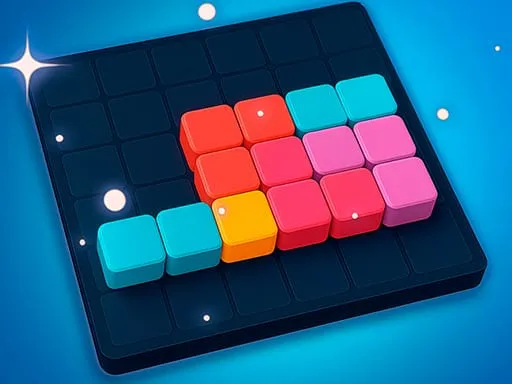
A current block puzzle game often uses a 10x10 board, three upcoming pieces, and line clears with no timer. Google Play descriptions for major titles show this style clearly. The game loop is short, but the decision depth stays high.
Key design traits of a modern block puzzle game include:
- No forced speed, so players can think before placing.
- Clear reward feedback when rows or columns disappear.
- Short rounds that fit breaks between tasks.
- A low entry barrier, because drag-and-drop is intuitive.
This is good product design. A block puzzle game feels fair because mistakes are usually visible. If you lose, you can often point to a moment where board shape got too tight.
Why the Loop Feels So Satisfying
The success of a block puzzle game is not random. It combines three strong feedback layers.
First, there is visual order. Emptying a messy line gives instant relief. Second, there is planning reward. A smart setup that clears two lines feels earned. Third, there is survival tension. A crowded board makes every choice matter.
Because of this mix, a block puzzle game can feel calm and intense at the same time. You are not racing a clock, but you still feel pressure from limited space.
The best part is clarity. In many genres, players fail for unclear reasons. In a block puzzle game, failure usually has a clear cause: blocked lanes, isolated holes, or poor piece order.
What Research Says About Cognition
People often ask whether a block puzzle game can improve the brain. The honest answer is balanced.
A 2022 NIH news release reported that video game play in children was associated with differences in cognitive task performance in a large U.S. cohort analysis. But the report also made clear that association is not automatic proof of cause.
A 2024 Nature Human Behaviour paper found that links between gaming and well-being are nuanced and depend on context, motives, and measurement. This is important for any block puzzle game claim. You can discuss possible benefits, but you should avoid miracle language.
There is also practical evidence from puzzle-focused studies, including work on visual-spatial and attention outcomes in specific groups. Taken together, the research supports a simple view: a block puzzle game may help train attention habits for some people, but results depend on how you play and your broader lifestyle.
Healthy Use: Keep Control, Keep Benefits
The World Health Organization describes gaming disorder as a pattern with impaired control and significant life impact over time. That does not mean every player is at risk. It means healthy boundaries matter.
For most users, a block puzzle game works best with simple limits:
- Use short sessions with a clear stop time.
- Take breaks when decisions become rushed.
- Avoid late-night sessions that cut sleep.
- Track mood before and after play.
When you keep control, a block puzzle game stays a useful tool, not a drain.
A Better Way to Use Block Puzzle in School Breaks
A block puzzle game can fit study life if you use structure. Grade 9 students often need quick mental resets between homework blocks. A short puzzle session can work as a transition if it is planned.
Try this break model:
- Study for 25-30 minutes.
- Play one short block puzzle game session for 5-8 minutes.
- Return to study with one clear next task.
This pattern works because the block puzzle game session is finite and intentional. It is not endless scrolling.
Parents and teachers can use the same idea. Ask students to explain one move choice after each round. That small reflection turns a block puzzle game from pure entertainment into a thinking exercise.
Product Lessons for Indie Builders
If you build games, the block puzzle game genre teaches strong product lessons.
Lesson one: remove friction. Players should start in one click. Lesson two: keep rules stable, then layer depth through piece combinations. Lesson three: make failure readable.
A good block puzzle game does not need complex graphics to keep attention. It needs clean controls, fair logic, and fast feedback. That is why web versions remain attractive in 2026.
The browser also helps discoverability. A block puzzle game on the web can be shared with one link, used across devices, and tested without app-store install steps.
Why I Built block-puzzle.org
I built https://block-puzzle.org because I wanted a fast, no-friction block puzzle game experience in the browser. Many players just want to open a tab and start.
On my site, the goal is simple: let users practice a block puzzle game loop without clutter. That makes it easier to test habits, compare sessions, and keep a steady routine.
If you are reading this article and want to apply it, start with one short run on https://block-puzzle.org. Focus on board quality, not only score. One deliberate block puzzle game session is more useful than three rushed sessions.
What People Search For
Search behavior around block puzzle game topics is practical. People usually want one of four things:
- Basic rules.
- Better scores.
- Fast no-download play.
- Honest advice about effects and habits.
A strong article should answer all four. That is why this page combines history, design, research, and usage habits in one place. If someone searches "best block puzzle game online," they should find both play options and clear context.
For creators, intent mapping matters. If your block puzzle game content only chases keywords and ignores user questions, readers leave fast. Useful structure beats keyword stuffing.
Common Myths
Myth 1: A block puzzle game is just luck
Luck matters in piece order, but long-run outcomes in a block puzzle game strongly reflect decisions about space and sequencing.
Myth 2: More time always means more benefit
Not true. A block puzzle game session has diminishing returns when focus drops. Short, focused sessions are usually better.
Myth 3: Browser games are low quality
In 2026, that assumption is outdated. A browser block puzzle game can deliver excellent speed, controls, and accessibility.
7-Day Practical Plan
If you want action, use this one-week block puzzle game routine:
Day 1: play 10 minutes and log your top three errors. Day 2: keep one lane open at all times. Day 3: focus on preventing single-cell holes. Day 4: slow down and plan piece order. Day 5: practice one calm recovery from a crowded board. Day 6: compare two sessions and note better choices. Day 7: play one clean review session on https://block-puzzle.org.
This plan is short, but it builds repeatable block puzzle game habits.
FAQ
Is this article only for advanced players?
No. Any beginner can use this block puzzle game guide because the language is simple and the steps are practical.
Can a block puzzle game replace study tools?
No. A block puzzle game is a support tool for breaks, focus resets, and spatial thinking practice. It should not replace core study work.
How often should I play?
For most people, one or two short block puzzle game sessions per day is enough.
Where can I play right now?
You can play a browser block puzzle game on https://block-puzzle.org.
Final Takeaway
The block puzzle game genre lasted for decades because it matches how people think: simple rules, visible feedback, and meaningful choices. From polyomino math to modern browser play, the format keeps evolving without losing its core.
If you want to play with purpose, treat each block puzzle game session as a small thinking workout. Keep sessions short, keep goals clear, and keep control of your time. That is the smartest way to use a block puzzle game in 2026.
Sources
- Tetris History and timeline: https://tetris.com/about-us
- Tetris company timeline details: https://tetris.com/company-bios
- Polyomino definition and background (MathWorld): https://mathworld.wolfram.com/Polyomino.html
- NIH release on gaming and cognition (October 24, 2022): https://www.nih.gov/news-events/news-releases/video-gaming-may-be-associated-better-cognitive-performance-children
- Nature Human Behaviour (2024) on gaming and well-being: https://www.nature.com/articles/s41562-024-01948-y
- Nature Human Behaviour commentary (2024): https://www.nature.com/articles/s41562-024-01878-9
- WHO Q&A on gaming disorder: https://www.who.int/news-room/questions-and-answers/item/addictive-behaviours-gaming-disorder
- Example Google Play description for modern block puzzle format: https://play.google.com/store/apps/details?id=game.puzzle.blockpuzzle
- Arkadium Block Champ help page (updated April 7, 2025): https://support.arkadium.com/support/solutions/articles/44002252733-how-do-i-play-block-champ-